
Yes, you can get rid of bed bugs yourself — if you catch them early, act in the right order, and keep at it for at least two to three weeks. What kills bed bugs instantly is heat: a sustained 50°C (122°F) kills every life stage, eggs included. But most home infestations are bigger than they look, which is why DIY efforts so often relapse within a month.
Confirm it’s actually bed bugs → contain the spread (heat-wash and bag everything) → vacuum and encase the mattress → treat with steam and residual products → repeat weekly → call a pro if you’re still seeing signs after three weeks.
How to Confirm It’s Bed Bugs First
Before you treat anything, make sure bed bugs are actually what you have. Treating the wrong pest wastes the weeks you need most.
Look for:
- Blood spots on the sheets. Small rust-coloured smears where bugs were crushed after feeding.
- Dark dots in seam lines. Check the mattress piping, box spring corners, and headboard joints. Fecal dots look like a felt pen was poked into the fabric.
- Shed shells. Pale, translucent husks the size of an apple seed.
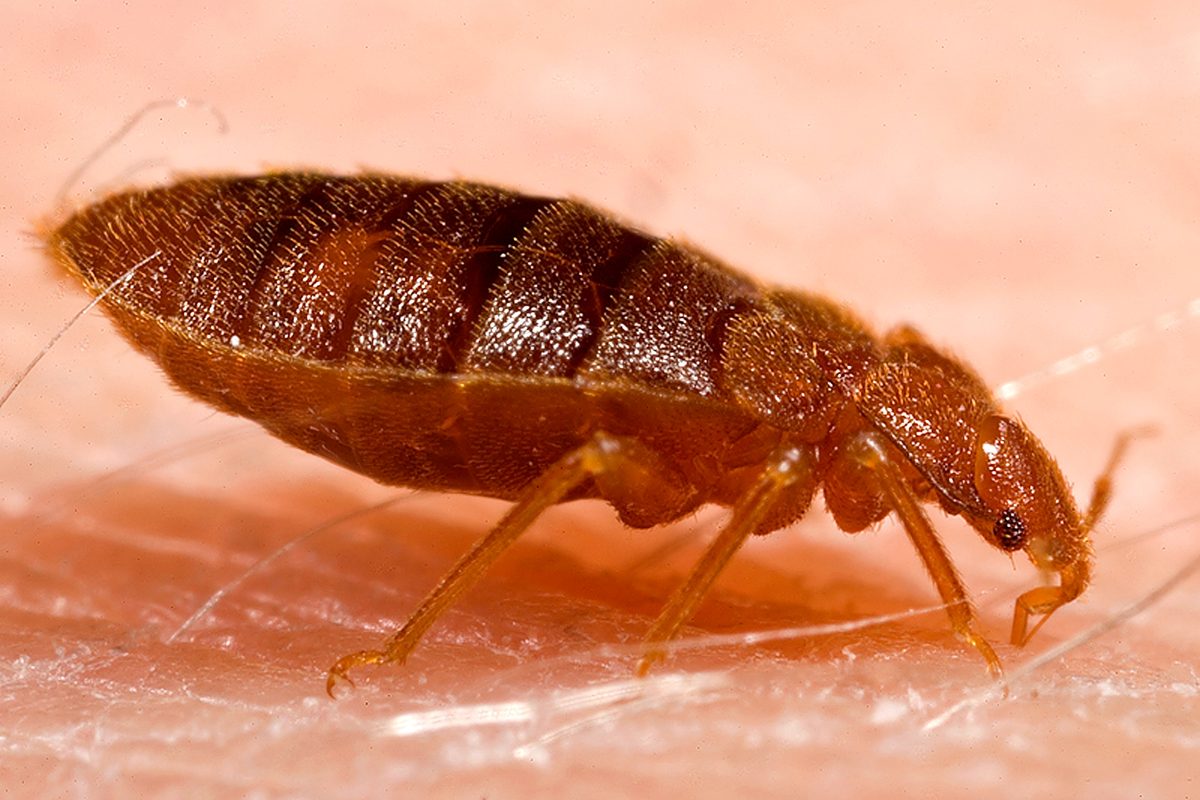
- Live bugs. Flat, reddish-brown, about 5 mm. They hide within a metre or two of the bed — in the frame joints, behind the headboard, inside the box spring cover, along baseboards.
Bites alone are not confirmation. Mosquito and flea bites look similar, and some people don’t react to bed bug bites at all. Find a physical sign before you commit to a treatment plan.
If you want a professional set of eyes on it, Pesto Pest Control does bed bug inspections in Saskatoon — the inspection is free.
Step 1: Contain and Isolate
Bed bugs spread through your home on fabric and clutter. Your first job is to stop that.
The laundry protocol:
- Strip the bed and everything within reach of it — sheets, pillowcases, duvet covers, curtains, throw blankets.
- Bag it in the room and carry it straight to the washer. Don’t drop it in the hallway.
- Wash on the hottest setting the fabric allows, then dry on high heat for at least 30 minutes. The dryer is the tool that matters — it’s the heat that kills, including eggs.
- Keep cleaned items in sealed bags or bins until the infestation is gone. Re-infesting clean laundry is the most common DIY setback.
Move the bed away from the wall, and don’t start sleeping elsewhere in the house. Bed bugs will follow you, and you’ll spread the problem to the couch or spare room.
Step 2: Vacuum, Encase the Mattress, Declutter
Vacuum everything: mattress seams, box spring, bed frame joints, headboard, baseboards, and the floor around the bed. Use a crevice tool. Empty the vacuum or seal the bag immediately and take it outside. The vacuum won’t get eggs glued into seams, but it knocks down live numbers fast.
Encase the mattress and box spring in quality bed-bug-proof covers. These have zippers fine enough to trap bugs inside. Whatever is still in your mattress dies there over the following months — leave the cover on for at least a year, and don’t unzip it.
Declutter the bedroom, especially anything stacked under or beside the bed. Every box, pile of clothes, and stack of papers is harbourage. Bag it, seal it, and sort it later — ideally months later. Items you can’t wash can be frozen (4 days at -18°C / 0°F in a chest freezer, not an outdoor shed) or heated in a dryer.
Step 3: Treatment Options — Heat, Steam, and Residual Products
Steam. A dry-vapour steamer at 100°C+ applied slowly along seams, tufts, and frame joints kills bugs and eggs on contact. This is the single most effective homeowner tool. Move at roughly 3 cm per second so the heat soaks in, and hit every seam from two directions.
Residual products. Diatomaceous earth (food grade) puffed lightly into frame joints and behind the headboard cuts down survivors. If you use a registered residual spray, follow the label exactly — more is not better, and never spray a mattress you sleep on. Skip foggers entirely. They drive bugs deeper into the walls and into neighbouring units, which makes the problem worse.
Heat treatment as a service. Whole-room or whole-home heat treatment raises the space to lethal temperatures for several hours and reaches harbourage you can’t. It’s the method that resolves heavy infestations in one pass — it’s also why professional treatment costs more than a bottle of spray. Saskatoon’s bed bug treatment page covers what a professional treatment involves locally.
Repeat your steam-and-inspect cycle every 7–10 days for at least three weeks. That window covers the hatch cycle of any eggs you missed.
Why Bed Bugs Come Back
If the problem returns a month after treatment, one of three things happened:
- Eggs survived. Most home products don’t touch eggs. Anything that hatches after your last treatment restarts the clock.
- A harbourage was missed. They don’t just live in beds — check nightstands, wall sockets, picture frames behind the bed, and the gap where the carpet meets the baseboard.
- They’re coming from next door. In apartments, townhouses, and duplexes, bugs move between units through shared walls. If this is your situation, DIY in your unit alone cannot end it. Tell your landlord or property manager — coordinated treatment is the only fix for multi-unit buildings.
DIY vs. Professional Heat Treatment — An Honest Comparison
DIY works best when the infestation is recent, light, and caught in one room. It costs less, and it teaches you where the bugs actually live. Its weak spot is completeness: you are one person with a steamer, and bed bugs hide better than you search.
Professional treatment works best when bugs have spread past the bed, when it’s a multi-unit building, or when the thought of sleeping in that room again makes you exhausted. A technician brings commercial-grade heat or targeted residual application, treats the harbourage you’d never find, and knows what a resolved infestation looks like at the two-week follow-up.
The honest middle path: do Steps 1 and 2 immediately regardless. Containment is worth doing whether or not you eventually call someone. And if you’re in Saskatoon, a professional bed bug inspection costs you nothing — you can find out how bad it actually is before deciding.
When to Call a Pro — and What to Expect in Saskatoon
Call a professional if any of these apply:
- You’ve done two full treatment cycles over three weeks and signs continue
- The bugs are in more than one room, or in the walls and sockets
- You live in a shared-wall building (units must be treated together)
- Someone in the home has reacted badly to the bites, or the stress is affecting sleep
What a professional treatment looks like locally: an inspection to map the harbourage, a treatment plan for your unit, targeted application or heat, and a follow-up check to confirm the hatch cycle has been broken. Every job Pesto takes gets inspected first, treated by the owner himself, and quoted up front — no surprises on the bill.
Not sure you got them all? Book a Saskatoon bed bug inspection & heat treatment — call 306-715-1217.