The fast way to get rid of cockroaches is gel bait, not spray: bait carried back to the nest kills the colony that sprays never reach. What kills cockroaches instantly — squash, contact sprays, even some natural products — only touches the few bugs you see, and a German cockroach colony hides eighty bugs for every one that shows itself. Get the bait into their harbourage, keep it fresh for two weeks, and clean up the food and water that let them multiply, and even a bad kitchen infestation comes under control.
Confirm which roach you have (treatment differs) → clean out food and water sources → gel bait in harbourage corners, not on open floors → let the bait work 1–2 weeks without spraying → seal cracks and fix moisture → call a pro for German roaches in apartments or anything that’s survived a bait cycle.
How to Get Rid of Cockroaches Fast
If you need action this week, here’s the honest sequence:
- Day one: deep-clean the kitchen — degrease the stove, empty the toaster tray, seal all food, fix any dripping tap, and dry the sink overnight. Roaches can live weeks without food but not without water.
- Day one: place pea-sized dabs of gel bait in cabinet hinges, under the sink rim, behind the fridge motor panel, and along the back corners of cabinets — where roaches harbour, not where you’d stand.
- Days 2–14: leave the bait alone. Don’t spray, don’t wipe it off, don’t fog. Reapply where it’s eaten.
- Every few days: vacuum up dead roaches and empty egg cases; seal the bag and take it outside.
- Week two: reassess. Fresh bait with no new activity for a week is the finish line. Still seeing them after a full bait cycle means the harbourage you’re missing is inside a wall or a neighbouring unit.
Identify the Roach First — Treatment Differs
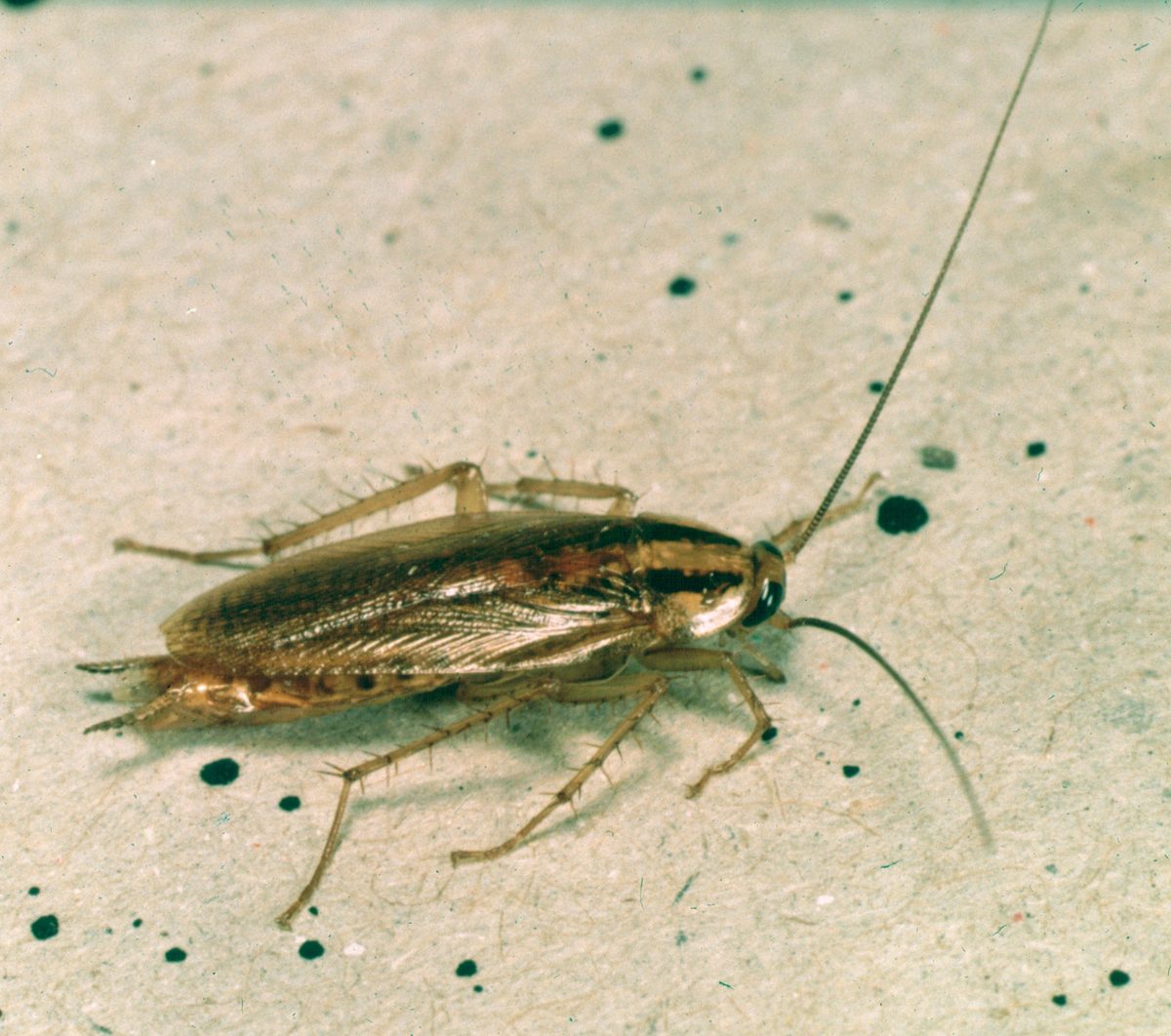
- German cockroach (small, tan, two dark stripes behind the head): the infestation roach. Found in kitchens and bathrooms, breeds indoors year-round, and one egg case carries up to 40 nymphs. Everything in this guide is aimed at them.
- American and other large roaches (bigger, reddish-brown): usually wanderers from a sewer line, floor drain, or the outdoors. Seeing one large roach is an incident, not an infestation — but check the drain traps and seal floor gaps.
- Wood cockroaches (males fly, active in summer): prairie outdoor roaches that blunder inside. A vacuum handles the individual; sealing entry points handles the repeat visits.
Key point. The biggest DIY mistake is blanket-spraying a roach problem that’s German — it scatters them and makes things worse.
Why You Have Roaches in a Clean House
Clean houses get roaches. Here’s why:
- They hitchhike. Grocery bags, second-hand appliances, cardboard deliveries, a friend’s backpack, luggage after travel. German roaches ride in, not in.
- Multi-unit buildings share the problem. If a neighbouring unit has them, your cleanliness only limits the population — the walls are the highway.
- “Clean” still has water and harbourage. A roach needs a gap the width of a credit card, some moisture, and a few crumbs your cleaning never sees: under the fridge gasket, inside the dishwasher seal, the drip tray under the plant pot.
So if you have roaches and feel insulted by it — that’s normal, and it doesn’t change the treatment. It just means exclusion and moisture control matter even more.
Step 1: Sanitation — Removing Food and Water
Bait works only when your food isn’t competing with it. Before baiting:
- Transfer cereals, flour, rice, and pet food into sealed hard containers.
- Degrease around the stove and hood; roaches eat grease films.
- Empty and wipe the toaster tray and microwave interior.
- Fix drips, dry the sink and dish rack overnight, and empty pet water bowls at night where practical.
- Take recycling and garbage out regularly; rinse the bins if they’ve had food residue.
- Pull the fridge and stove out once and clean underneath — this is often the main buffet.
You can’t starve roaches out with cleaning alone (they’ll eat soap film and book glue first), but you can make your bait the best meal in the room. That’s the point.
Step 2: Gel Bait — the Pro One-Two
Gel bait is why professional cockroach jobs work — and it’s available to homeowners too.
How to bait correctly:
- Dabs the size of a pea — many small dabs beat one big blob.
- Placement is harbourage: cabinet hinges, under-sink rim, wall-floor junctions, behind appliances, the motor compartment of the fridge, inside cabinet corner joints. Not on open counters.
- In apartments and row housing, bait your unit plus the common gaps — under the shared bathroom wall, around pipe penetrations.
- Reapply weekly until two full weeks pass with no new roaches. Bait dries out; stale bait is ignored.
- Use an insect growth regulator (IGR) alongside bait if you can get one — it sterilizes the emerging nymphs and is what breaks the breeding cycle in bad infestations.
Why not spray: household sprays are repellent. Roaches avoid the treated zone, scatter into new rooms and wall voids, and the population survives — now harder to bait because they’ve learned the territory. Spraying around bait is the fastest way to ruin bait.
Natural Options — What Works, What Doesn’t
- Diatomaceous earth: works, slowly. Food-grade DE puffed as a thin dust into wall voids, under appliances, and along baseboard gaps kills roaches physically over days. Thin layer — piles of it just get walked around.
- Boric acid: works, with placement. A light dusting under the fridge and behind the kick plates; keep it out of reach of kids and pets, and away from bait placement (roaches avoid powder zones you actually need them to cross for bait — separate the two).
- Bay leaves, cucumber peels, fabric softener: myths. None of them affect a population.
- Traps (sticky): monitors, not treatments. Sticky traps tell you where activity is and whether it’s declining — worth having, useless as a kill mechanism on their own.
How to Get Rid of Roaches in an Apartment
Shared walls change the rules:
- Treat your unit fully anyway — baiting reduces your local population and pressure.
- Do not fog or bomb. In a building, foggers drive roaches through wall gaps into neighbouring units, including ones that didn’t have them. Buildings where everyone fogs simultaneously redistribute the problem evenly.
- Get the property manager involved. Roaches move unit to unit; the only real fix is coordinated treatment of adjacent units at the same time. A landlord who won’t coordinate is a landlord you document in writing — Saskatchewan tenancies support pest-control requests for exactly this reason.
- Re-inspect monthly after treatment. In buildings, “gone” means “gone until someone’s neighbour moves out and leaves an egg case in the stove.”
When to Call a Pro (Why German Roaches Beat DIY)
Call a professional when:
- It’s a German roach problem in an apartment, condo, or row house — shared walls, no way around it
- You’ve run a proper gel-bait cycle for two to three weeks and they’re still active
- They’re in more than one room (bathroom and kitchen means the wall void is involved)
- You’re seeing them in daylight — that’s a crowded-harbourage sign, meaning big numbers
A professional treatment brings commercial bait matrices, IGRs, dust applications into voids you can’t reach, and — the part that actually ends it — the experience to find the harbourage that’s been hiding them. In Saskatoon, Pesto’s cockroach control starts with a free inspection and a quoted plan, and every job is done by the owner personally.
Roaches keep coming back? Book same-day Saskatoon cockroach control — call 306-715-1217.
Frequently asked questions
How do I get rid of roaches overnight?
You can't eliminate an infestation overnight — anyone promising that is selling foggers. Overnight you can make real progress: clean out food and water, place gel bait in harbourage corners, and vacuum what's visible. The colony-level result takes one to two weeks of fresh bait.
What kills cockroaches instantly?
Direct contact — crushing, contact sprays, or hot steam kills individual roaches on the spot. But roughly eighty roaches hide for every one you see, so instant kills never touch the colony. Gel bait kills the colony, just not instantly.
Why do I have roaches in a clean house?
Roaches hitchhike in on deliveries, groceries, appliances, and luggage, and they travel through shared walls in multi-unit buildings. Cleanliness limits how fast they multiply — it doesn't keep them out or remove the ones already hiding.
Does diatomaceous earth work on cockroaches?
Yes, as a slow physical kill. A thin dusting in wall voids and under appliances works over several days. Keep it as a light layer, don't pile it, and place it separately from gel bait — roaches avoid obvious powder zones.
How do I get rid of roaches in an apartment?
Bait your own unit thoroughly, never fog, and get the property manager to coordinate treatment of the adjacent units — in shared-wall buildings, one treated unit gets re-infested until the neighbours are treated too.